

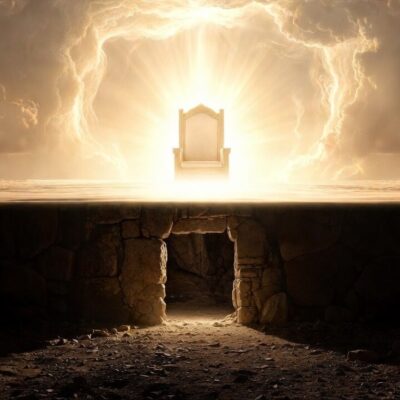
Scripture Reading: John 1:1–14
In the beginning was the Word, and the Word was with God, and the Word was God. He was in the beginning with God. All things were made through Him, and without Him nothing was made that was made. In Him was life, and the life was the light of men. And the light shines in the darkness, and the darkness did not comprehend it.
There was a man sent from God, whose name was John. This man came for a witness to bear witness of the light, that all through him might believe. He was not that light, but was sent to bear witness of that light. That was the true light, which gives light to every man coming into the world.
He was in the world, and the world was made through Him, and the world did not know Him. He came to His own, and His own did not receive Him. But as many as received Him, to them He gave the right to become children of God, to those who believe in His name, who were born, not of blood, nor of the will of the flesh, nor of the will of man, but of God.
And the Word became flesh and dwelt among us. And we beheld His glory, the glory as of the only begotten of the Father, full of grace and truth.
Prayer
Let’s seek the Lord’s blessing on this word.
O gracious God in heaven, we praise you and thank you for your word. We know that your word is truth, that it is our only infallible rule for faith and life, and that it reveals many things that are clear and easy to understand. And yet you have revealed to us enough that we might come to some understanding to see the glory of who you truly are.
And especially as we come to this passage this morning, we pray, O Father, that you would give us that understanding, that you would help us to see the glory of the Lord Jesus Christ, and the glory of the Father, and the glory of the Son, all to the praise of your name. In the name of the Lord Jesus Christ, we pray. Amen.
Introduction: Seasonal Attention to Jesus and Its Challenges
Well, this time of year actually has much in common with early December. And that commonality is often seen, not just among Christians, but we even see some of it in the unbelieving world as many people begin to take note of spiritual things. And in particular, the spiritual things that they will take note of is Jesus and the events either surrounding his birth, which we think about in December, or his death and resurrection, which we often think about this time of year in the spring.
And we know that much of this attention has been really diverted and taken over by a lot of consumerism. But we know also because of the way that Christianity has really impacted our society and culture, it’s still common and even perhaps, you know, common to hear some reference to Jesus out in the public square during these times of year. But unfortunately, a lot of this attention, or some of this attention, isn’t always positive.
Now, maybe dating myself and others, but back in the day when print magazines were more popular than they are today, now you have a lot of online versions, but you could almost guarantee that sometime in December or sometime in the early spring, magazines like Time or Newsweek or even perhaps some television news program would have a cover story or special program about the search for the historical Jesus.
So something about Jesus, something about his birth, his crucifixion, his resurrection from the dead. Now at first glance, you might think, hey, this would be a good thing. After all, articles and programs about Jesus and the Bible could be greatly used to further the advance of the gospel.
But as soon as you began reading the articles or watching the program, what quickly became evident that the intent was actually to undermine the truth of the facts of these events as they are presented to us in the scriptures.
Indeed, rarely, if ever, would they even quote or interview even a conservative or even a broad evangelical scholar. Instead, they always turn to these unbelieving Bible scholars who were representing more liberal institutions, colleges, universities, and seminaries. He never contacted the president of the Reform Presbyterian Seminary or some other conservative folks that we might know of.
But the Apostle Paul warns that the things of God often do seem very foolish to men. And they seem foolish because the things of God are spiritually discerned. And so when we see these kinds of things, when we see people talking about the Bible, who are claiming to be scholars of the Bible, and yet they have no real understanding of the Bible, it’s revealing their own spiritual blindedness.
They may have a lot of knowledge, they may be very smart people, but they don’t understand even the clear truth presented before them, because they don’t have the presence of the Spirit within them.
And so today, if you hear someone on social media, or you read an article online, or on a magazine, or hear a program on the television or on the radio, and if you hear the phrase, the historical Jesus, as opposed to simply saying, Jesus, Beware, because more often than not, what you’re about to hear is a lot of unfounded speculation and theories of who Jesus was that are contrary to what the scriptures teach.
If you want to know who Jesus was or what the true Jesus was about, well then, seek the wisdom of the Holy Spirit in prayer as you read what God has given to us in His Word, the Bible, so that you might understand the truth that He has given.
Well, of course, this is what we hope to do this morning as we focus our attention on what the Scriptures clearly reveal, and in particular, what the Apostle John has to tell us about the incarnation of the Lord Jesus Christ, and why it’s one of the essential foundational truths of the Christian faith.
Because without the incarnation, we’d all be without hope in this life, and most certainly we would be without hope in the eternal life to come.
Review of John 1:1–13 – Who the Word Is and What He Brings
But before we get to the climactic point of John’s prologue in verse 14, which directly addresses the incarnation, it’s going to be helpful, I think, for us to quickly review what we’ve covered thus far and what we have learned so far about Jesus, who is the Word, who became flesh and dwelt among us.
Remember that John begins his gospel, his prologue, by drawing our attention to really the dawn of creation, when the only thing that existed was God. But something else was there with God. The Word.
The Word was in the beginning with God, and through the Word all things came into being. In fact, nothing that was created came into being without the Word.
And of course, remember we affirmed, we kind of had that spoiler alert, that Jesus Christ, the Son of God, is the Word.
But if this is true, and indeed it is, then there’s something else that John is telling us about the Word, that is Jesus.
Jesus Christ is God.
In fact, as the writer to the Hebrews notes in Hebrews 1, Jesus is the fullest revelation of God’s truth and of God’s being. He’s the radiance of God’s glory and the exact representation of God’s nature.
Jesus Christ the Son was in the beginning. He was with God in the beginning, and Jesus Christ the Son was God before the beginning.
John is establishing here again the fact of the divinity and the pre-existence of the person of Jesus Christ. From all eternity, the Son has been and still is truly and fully God.
The Word Is Life and Light
But we’re also told something else about the Word. The Word is life.
Verse 4, In Him was life and the life was the light of men.
Now again, this follows necessarily from the fact that the Word is divine, because we know that life comes from God alone. Life doesn’t just accidentally come about from a random mix of chemicals, as some would like to set forth and believe. No, it comes from God. And through His Word, all things exist and have their being.
That is, life is given and sustained through Jesus Christ. Jesus Himself would later proclaim in John 14, verse 6,
I am the way, the truth, and the life. And no one comes to the Father but through Me.
Life with the Father, which really is the true, eternal, and everlasting life, the life that we should desire, only comes through Jesus Christ, God’s glorious revealed Word. Jesus the Word is life.
Well then John goes on to again making allusion to the creation account in Genesis when he says that in him was life and the life was the light of men. This reminds us of Genesis 1-3. God said, right, God is speaking. That’s where we see the word present in those first verses of the book of Genesis. God said, let there be light. And there was light.
God brought light into the world because God is light, and in Him is no darkness at all. And so it’s no surprise then that light is used to describe the Word, Jesus Christ. Again, Jesus testifies of Himself in John 8,
I am the light of the world. And he who follows Me shall not walk in the darkness, but shall have the light of life.
And this is why the life that the Word brings is the light of men. It’s a spark that shines forever, keeping those who believe out of darkness.
And so before his birth, Jesus was the divine word. He was life, and he was the light of men.
The Purposes of Christ’s Coming
And of course, these are then closely related to what Jesus came to accomplish.
- Jesus Christ, the divine word, came to bring life. He is life and he came to bring life. But not just to bring life into existence, he came to bring new life out of deadness.
Jesus says to his disciples in John 10,
I came that they might have life and might have it more abundantly.
He’s come that we might have life, and that abundantly, even everlasting life. And let me tell you, it doesn’t get any more abundant than everlasting never-ending.
But why? Why did Christ come to bring abundant life?
Weren’t we already alive? No, we were dead. Dead in our sins and transgressions. Spiritually dead before God, unable and unwilling to do any good thing. We weren’t sick, we weren’t injured, we weren’t even near death. We were dead, dead, dead.
And we remember that this deadness was a result of sin in the world, and in particular the sin of our covenant head and our father, Adam. Adam’s sin brought death to all men, because all sinned in him. We all bear the guilt then of Adam’s first sin, and the curse of sin is death.
Yet while we were dead sinners, while we were God’s enemies, God graciously sent His Word, His Son Jesus Christ, that we might have life.
It’s because of this that, again, John says so beautifully, as we considered last time in verse 13,
who were born not of blood, nor the will of the flesh, nor of the will of man, but of God.
That is, we, those who believe, were born, or given new life, not of blood. That is, not from our ancestry or our heritage. Our family connections. Nor of the will of the flesh. It wasn’t through the procreative act. It wasn’t a physical thing. Nor of the will of man. It wasn’t by the exercise of any effort, desire, or volition of man. But we were born and given new life by God and God alone.
Friends, this is called grace.
And it truly is amazing that God would freely give life to those who were dead, to those who didn’t deserve it. Jesus Christ came to bring that life to us.
- Jesus came to bring light, the light that was to lighten the hearts of men, to show them the way of truth and everlasting life.
The psalmist describes our situation this way in Psalm 107, verse 10.
Those who sat in darkness and in the shadow of death, bound in affliction and irons, because they rebelled against the words of God and despised the counsel of the Most High.
We’re dead, we’re bound, and we’re in darkness. Because our sin before God, we were in spiritual darkness.
And yet Christ came to shatter that darkness. That it might be said by the prophet Isaiah,
The people who walk in darkness will see a great light. Those who live in a dark land, the light will shine on them.
And the Apostle Paul says much later, 2 Corinthians 4,
for God who said, light shall shine out of the darkness, is the one who has shone in our hearts to give the light of the knowledge of the glory of God in the face of Christ.
In Christ, who is light, we have light. And certainly we rejoice then at the coming of the divine light of God, that brings warmth, and that brings life, and that confounds the darkness.
And as we saw before in verse 5, that the darkness could not comprehend or understand the light, and so it shrinks back from the light, and the light advances and gains victory. Even as Christ has gained the victory over Satan, sin, and death itself.
- Jesus Christ came to bring sonship.
And we looked at this in verse 12.
But as many as received Him, to them He gave the right to become children of God to those who believe in His name.
And so to those who receive the light, who believe that Jesus Christ was the divine Word, the only begotten Son of God, Jesus gives to them the right and the privilege to be called children of God.
Again, born of God through His grace alone, we’re adopted into God’s eternal family. Now, being children means that we’ve been reconciled to God through Christ. And it’s the Spirit of God that’s given to us as a guarantee of our adoption.
The Apostle Paul makes this clear in Romans 8 verse 15,
For you did not receive the spirit of bondage again to fear, but you received the spirit of adoption by whom we cry out, Abba, Father. And the Spirit Himself bears witness with our spirit that we are children of God. And if children, then heirs, heirs of God, and joint heirs with Christ.
Our sonship through Jesus Christ entitles us to all the glories of heaven promised to us by the Heavenly Father. And of course, this is on top of what He’s already given to us. Life, new everlasting life, enlightenment of His truth and knowledge of His glory, and now this sonship.
Again, none of this we deserved. But God purposed that His eternal Son would come to accomplish these things.
But how? How could this eternal Son come? How would He accomplish all these things?
The Climax: The Incarnation – Verse 14
Well, this brings us to verse 14.
And the Word became flesh and dwelt among us. And we beheld His glory, the glory as of the only begotten of the Father, full of grace and truth.
The Word became flesh. Indeed, the incarnation, which is what it means, incarnation means taking on of flesh.
The incarnation is one of the greatest miracles that we have recorded for us in the Scriptures. And it’s also something that our, again, our finite minds will really struggle to fully grasp and comprehend.
But the fact that God, who is a spirit and does not have a body like men, would come and take upon himself a body of flesh and become a man. Again, the very thought of it is astonishing.
Yet we know that he was no ordinary man. He was still full of grace and truth. He was still the only begotten of the Father. He was still the express image of the glory of God. He was still the divine Word of God. And yet, He took upon Himself a human nature. Not losing anything of His divinity.
Except at times, He was hiding His divinity and covered His divinity and His divine glory from full view to those He came in contact with. Lest, of course, they would be consumed in His presence.
Remember what the Lord had warned Moses and told Moses in Exodus 33,
You cannot see My face, for no man shall see Me and live.
And so we have Jesus, the Son of God, the Word, coming in the flesh. And so He has a veil, in a sense, hiding His glory. There are glimpses of it, and we’ll see that. There’s glimpses of His glory that He reveals at different times. But it’s covered. Otherwise, mankind would perish in His sight.
And so by becoming flesh, this eternal Word took upon Himself human flesh. And yet, at the same time, He never ceased to be who He was from all eternity. And so, again, He was still the eternal Son of God. But now, He was also Jesus Christ of Nazareth, who lived, who walked, who talked, who ate, who slept, who drank, who wept, who suffered, and He died, fully God, and fully man, two distinct natures, and yet one person.
Though it’s a mystery to our finite minds, again, it’s the great truth and glory of the incarnation that’s revealed here.
Now, truly, this was a tremendous gift and really a great mercy for sinful mankind, even for us.
But consider for a moment what this meant for the Word, for Jesus, for the eternal Son of God. What for us is a great gift, for Jesus was a great act of deep humiliation.
Now, oftentimes when we talk about the life of Christ and His mission, we speak of His exaltation and His humiliation. And His exaltation is often associated with His resurrection and then, of course, His ascension when He’s seated at the right hand of God the Father. And most often when we think of His humiliation, we think of His suffering, the humiliating death of the cross.
Friends, Christ’s humiliation began way before that. It began when he was born.
The Apostle Paul says in Philippians 2,
let us this mind be in you which was also in Christ Jesus, who being in the form of God, did not consider it robbery to be equal with God, but made himself of no reputation, taking the form of a bondservant, and coming in the likeness of men, and being found in appearance as a man, he humbled himself, and became obedient to the point of death, even the death of the cross.
Jesus’ humiliation consisted of His coming in the likeness of men, whereas Paul says in Romans 8, the likeness of sinful flesh. Becoming a man was a great act of humiliation for the eternal son of God.
And by doing so, he made himself of no reputation and he humbled himself. Now, some older versions may have here, he emptied himself and you have to be careful with that because it can be very misleading. Christ was not emptied of anything. He remained eternal God.
He took on human flesh. And he became a man, leaving behind only his position of power and glory for a time, exchanging it for a weak and frail body of flesh.
Now, John emphasizes this same humiliation with what he says and what he doesn’t say here. Note that he doesn’t say that the Word became a man. That is true. He did become a man. But you would think that would have some dignity. Right. Man is created in the image of God that gives man all mankind dignity because we’re all created in the image of God.
But John is wanting to emphasize again, the humiliation, the depths to which the son of God stooped. The word became flesh. It’s almost crude and base. And perhaps the only thing that he could have said that would even been lower is that the word became dust. Because it was from the dust of the earth that man was formed. And it’s to the dust that he will return.
But the Word was made flesh.
And of course, John here is, with this very clear teaching, is refuting any charges that will come later from Gnostics and other heretical groups who taught that the Spirit was good and that the flesh was evil. and they had all these different views of Jesus, denying that He had come in the flesh, or denying that He was truly God. and mixing and blending His natures. John is very clear here. The Word became flesh. Eternal God, still always eternal God, becomes man. Takes on that human nature.
And so again, the incarnation was a great act of humiliation for the Word, the Son of God.
Why the Incarnation? – The Reason from Heaven
But why? Why on earth would God do this? Couldn’t there have been some other way for our salvation to be achieved? Well, there truly is no reason on earth. There’s no explaining it from a human earthly perspective.
But there is a reason in heaven that God has been pleased to reveal to us as to why he would do this. And it comes across very clearly in that familiar passage, John 3, 16.
For God so loved the world that He gave His only begotten Son.
It was for no other reason than for the good pleasure and purpose of God out of His abundant and gracious love for His people, even for us.
But what does this mean? Why was the Incarnation such a big deal? Why would this need to happen? Okay, we understand it’s because God loved us. But still, why did it need to happen for life, light, and sonship to come to us? How does it demonstrate? How does the Incarnation demonstrate to us the abundant grace and love of God? What are the implications for us?
Implications of the Incarnation
- Jesus Christ the Word became flesh so that He might dwell among us. That He might, by living among us, reveal to us the glory of God.
As John notes here,
and we beheld His glory, the glory as of the only begotten of the Father, full of grace and truth.
As Jesus ministered on the earth, He continually showed the glory of the Father in Him by His teaching. Remember how even the scribes and Pharisees were amazed that He taught as one who had authority? That was the evidence of the glory of God in Christ. In His preaching, and of course in the many miraculous wonders. People were led to praise God whenever Jesus worked these miracles.
But not only this, the incarnation was the fulfillment of that Immanuel prophecy given long ago in the prophet Isaiah. He shall be Immanuel, which means God with us.
That just as in the days of the Old Testament Israel when God dwelt among the people and in the tabernacle and then later the temple, He now has given us a better and fuller presence in that He dwells with us, as one of us.
And of course now, for us here today, I mean that was kind of back in John’s day who actually walked and talked with Jesus. But now we actually have something even better than the apostles. At least initially. Because we have the Son of God dwelling in us. The presence of the Holy Spirit in those who believe.
And so John greatly emphasizes this dwelling of God’s presence with us.
And the word translated dwell here is literally to pitch a tent. Or some might even say that the word tabernacled among us. And so John is making a clear reference here that it’s the same word used in the Septuagint, the Greek translation of the Old Testament in reference to the tent of meeting and the tabernacle of the Lord.
Remember what happened, that tabernacle in the tent of the Lord is the glory cloud of God, the Shekinah glory cloud. And even that word Shekinah is related to this dwelling, this tent, dwelling in tents. This glory cloud of the Lord descended upon the tent to show to the people that God was truly in their presence, dwelling among them. A very visible sign.
And so John here is declaring that now the fullness of God’s glory, revealed to us in His Son Jesus Christ, has come and has dwelt among us, and even now, as we said, dwells within us through the Holy Spirit.
- The Word became flesh not only to dwell among us, but so that He might identify with us, especially to identify with us in our weakness and our sin as we live in this fallen and sinful world.
As we noted already, the Incarnation was a great step of humiliation for the Son of God.
He humbled himself greatly by coming in the form of a servant, taking on sinful flesh. He was born of a woman, born under the law. He who was king of heaven and earth was born not in a grand palace, but he was born in a stable wrapped in swaddling clothes, placed in a feeding trough. And this, of course, was just the beginning of this humiliation that would come to a climax at the cross.
All this that He might be able to sympathize with us in our weaknesses, being tempted and tried in all ways that we are, yet without sin.
Think about the love of God that is demonstrated here for us. That He desired to endure those things which we endure because of the curse of sin in the world. so that we might have the confidence that we truly have a High Priest who knows the depths of our pain and our suffering.
- The Word became flesh so that He could do and accomplish what we couldn’t.
See, as a man in the flesh, born under the law, Jesus perfectly kept the law of God, thus fulfilling the covenant obligation on our behalf.
Remember, because of our sinfulness, we can’t do this. Because Adam, who was our chief representative, failed in keeping God’s covenant. And everyone born of Adam fails at keeping God’s covenant. And so this failure leads to our total inability to obey God as He commands.
My friends, Christ came, the Word came to fulfill all righteousness so that we might become the righteous of God through Him.
But in order for this transaction to be complete, in order for us to become the righteous of God through Him, our sin had to be removed.
Our sin needed a scapegoat and a substitute. Someone to take it away from us and undergo the punishment on our behalf and in our place.
Because Jesus came in the flesh as a man who was truly God, He was able to become that scapegoat. Because He alone was perfect and without blemish as He was. And yet, for our sakes, He became sin. And because He became sin on our behalf, He had to endure the wages of our sin. the curse of death.
- That he might suffer and die for our sins, therefore reconciling us to God, our creator.
And we should never lose sight of the fact that the whole purpose of the incarnation was ultimately the cross. Even when we consider the testimony surrounding the birth of Jesus, we see that His sacrificial death on the cross for our sins, His suffering and dying on our behalf, His enduring the wrath and curse of God that only we deserve, was always at the center.
And we see this, for example, in the message of the angel Gabriel to Joseph in Matthew 1,
And she will bring forth a son, and you shall call his name Jesus. who will save His people from their sins.
He will redeem us through His own shed blood.
And then, of course, we have the chorus of angels declaring to the shepherds who are watching their flocks by night.
And they said, for there is born to you this day in the city of David a Savior, who is Christ the Lord.
Even at His birth, the salvation that He would secure, the redemption, the atonement that He would secure for His people, the forgiveness of sins, peace and reconciliation with God, was in full view.
There was no only one way to salvation. God required a perfect sacrifice, even a man without blemish.
And since none could be found among the sons of Adam, by His grace and mercy, God sent His own Son, His Word, who became flesh and dwelt among us, who suffered with us and died for us, that we might become children of God Most High.
Thus, the reconciliation between God and sinful man has been made possible, because Jesus, the Word, became flesh and dwelt among us.
And because of this reconciliation by the God-man, Jesus, we can now relate personally to Christ, who is our Savior. And because we can relate personally to Christ, we can therefore relate personally to God, our Creator.
Because He came in the flesh, and He related to us in our fallen sinful condition, accomplishing what we could never accomplish because of our sin. And then He graciously gave Himself as at once for all perfect sacrifice for sins, redeeming us by His shed blood.
Beloved of God, this is the glory of the incarnation and essential foundational truth of the faith that we profess and believe.
Yes, we know that there are many naysayers, many unbelieving scholars, so-called scholars who try to argue otherwise. But this is the truth which John and the whole testimony of the scriptures sets forth to you even today.
Conclusion: Your Response to the Glory of the Incarnation
So then what is your response? What is your response to the glory of the incarnation? To what Christ Jesus has done for undeserving sinners?
Will you harden your hearts to this truth? or will you rejoice and be glad with great thanks for the glorious truth of the incarnation and for God’s great love poured out upon undeserving sinners when the Word became flesh and dwelt among us for your good and to the glory of God alone.
Closing Prayer
Let’s pray.
Gracious God in heaven, we do rejoice and give thanks for this important reminder. And we, there is much about the incarnation that we could have continued to study and to think about. But Father, we just praise you and thank you. Know that we don’t fully understand how these things could even be possible. Yet we see the truth is revealed here in your word to us.
And we see why it had to be this way. Because your plan was to redeem your people. To save them from their sins. To provide for them the once for all perfect sacrifice. Who had to be a man, that was the condition. Because the covenant had first been made with man. And it was man who broke that covenant. And so it needs to be a man to fulfill that covenant obligation of perfect obedience. And this Christ did. But we know that there was no way a man could endure the curse, your curse, righteous curse and wrath on sin for all sinners of all time, past, present and future. And so he also had to not just be man, but he had to be eternal God.
And we praise you and thank you, O Lord, that in this great mystery of the incarnation, You have revealed the God-man, the Lord Jesus Christ, who alone is our Savior and our Redeemer and our only hope for salvation and the forgiveness of our sins.
And so we would pray, O Lord, that You would, by the power of Your Spirit, impress these great truths upon each of our hearts, drawing us all closer to Yourself, that we may be embracing these things, regardless of what others might say, We see the truth revealed here. All to the praise of your glorious name.
And so we ask, Lord, for your blessing in these things. In the name of the Lord Jesus Christ, we pray. Amen.