

Scripture Reading
Repent therefore and be converted, that your sins may be blotted out, so that times of refreshing may come from the presence of the Lord, and that he may send Jesus Christ, who was preached to you before, whom heaven must receive until the times of restoration of all things, which God has spoken by the mouth of all his holy prophets since the world began.
For Moses truly said to the fathers, The Lord your God will raise up for you a prophet like me from your brethren. Him you shall hear in all things, whatever he says to you. And it shall be that every soul who will not hear the prophet shall be utterly destroyed from among the people.
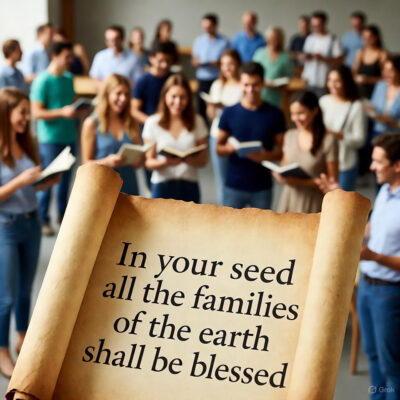
Yes, and all the prophets, from Samuel and those who follow, as many as have spoken, have also foretold these days. You are sons of the prophets, and of the covenant which God made with our fathers, saying to Abraham, And in your seed all the families of the earth shall be blessed.
To you first, God, having raised up His servant Jesus, sent Him to bless you in turning away every one of you from your iniquities.
Acts 3:19–26
Opening Prayer
Gracious God and Heavenly Father, we do praise you and thank you for your word. We thank you as we come to this particular passage this evening. We ask that you would give us understanding and insight by the power of your spirit and that your word would go forth and that it would be a true and rich blessing to each of us in our hearts, drawing us all closer to yourself. We pray now for your blessing upon your word. In the name of the Lord Jesus Christ, we pray. Amen.
Introduction – The Setting in Acts 3
What began, Acts chapter 3, remember that Peter and John had gone to the temple for the evening prayer service.
And on the way they met a man, a lame beggar at the gate, the gate called Beautiful, and they gave to him the greatest gift that he had ever received. Not only did they heal him, but they also presented the gospel to him. And he believed in the name of Jesus for salvation.
And of course, this man was so excited that he stirred up quite a commotion in the temple courts as he leapt around and danced and shouted the praises of God.
This commotion was, again, a providential opportunity for Peter to once again declare the gospel to a very large crowd.
So far in his sermon we considered the first part last time, but Peter has declared that Jesus is the Christ, that he is the promised Messiah, but he also noted that in ignorance the people have put him to death. Yet God has now raised Jesus from the dead, and that it was by the name of Jesus, the living Christ, that this man was healed.
Peter then called those who were listening to repentance, reminding them of a time of refreshment that was to come. And so this is where we pick up Peter’s sermon.
Main Theme of the Second Half of the Sermon
In the second part of his sermon, Peter again points to Jesus as the Christ, as the Messiah, who will usher in a time of refreshment and restoration.
He will also go back again to the scriptures and point to the prophets who have spoken of these things and had given warnings for failure to heed God’s word.
And then finally, he concludes by telling them that the covenant promises that were made to their fathers, to Abraham, Isaac, and Jacob, have now been fulfilled in Christ. And the blessings of these covenant promises flow to the Jew first, but also to the Gentiles, just as God had purposed at the beginning.
I. Times of Refreshing and Restoration (vv. 19–21)
Repent, therefore, and be converted, that your sins may be blotted out, so that times of refreshing may come from the presence of the Lord, and that he may send Jesus Christ, who was preached to you before, whom heaven must receive until the times of restoration of all things.
We have refreshment and restoration.
First – Refreshment
Repentance leads to this time of refreshment in the very presence of the Lord.
This refreshment comes from the renewed relationship that they would have between themselves and God through faith in Jesus Christ, who was the Messiah and who was the servant of the Lord that God had promised to send.
This refreshment was needed because sin had separated God and man.
This goes all the way back to the Garden of Eden when Adam rebelled against God and sinned by eating the fruit that God had told him not to eat.
The separation was marked at that time by death—physical death, spiritual death—and symbolized by the banishment of Adam and Eve from the garden, from the very presence of God.
Before the fall they walked with God in the garden and had intimate fellowship with him. Now they are banished from the presence of God.
Because of Adam’s sin, all those born from him—that is all humanity—are born into an estate of sin and misery that is in rebellion against God.
Even after God graciously called out Abraham and his descendants and entered into a covenant with them, the people persisted in sin, rebelled against Him, turned toward idolatry and immorality, leading to God’s judgment and exile from the Promised Land.
Yet God had promised, right from the beginning, that the seed of the woman would crush the head of the serpent—the first gospel promise.
All along God promised to bring his people back, to restore them, and ultimately to refresh them to a new and everlasting relationship through the coming of the Messiah, the seed of the woman—Jesus.
This time came when Jesus, the Son of God come in the flesh, dwelt among them, ministered, proclaimed the gospel, and offered himself as the once-for-all perfect sacrifice for sins.
Peter appeals: if they will even now repent and turn to God by faith in Christ, they will enjoy great refreshment even now in this life.
Second – Restoration
It is clear Peter is not speaking only of the present. There will come a time of restoration when all things will be made new—not only peace between God and man, but a new heaven and a new earth without sin, suffering, pain, or death.
The Jews closely tied this restoration to the coming of the Messiah and anticipated a political leader who would re-establish David’s kingdom in Jerusalem—an earthly kingdom.
But Jesus was the suffering servant who saved his people from their sins, not from the Roman Empire.
The kingdom of God was ushered in spiritually, not politically.
Of the increase of his government and peace there shall be no end, upon the throne of David… to order it and establish it with judgment and justice from that time forward, even forever. (Isaiah 9)
The throne of David is figurative of the eternal heavenly throne. The literal throne in Jerusalem has not existed since 586 BC.
Jesus rose from the dead, ascended, and now reigns at the right hand of the Father as mediatorial King, subduing his enemies until he returns.
When he comes again, the time of eternal refreshment and restoration will be fully realized.
This is the “already but not yet” of the kingdom:
- The kingdom is already here—forgiveness and peace with God are available now.
- The fullness of the kingdom and perfect restoration is still to come.
II. The Prophet Like Moses and the Warning of the Prophets (vv. 22–24)
Moses said:
The Lord your God will raise up for you a prophet like me from your brethren. Him you shall hear in all things… And it shall be that every soul who will not hear that prophet shall be utterly destroyed from among the people.
All the prophets from Samuel onward foretold these days.
Jesus is that promised Prophet—the Word of God in flesh.
This was confirmed at the Transfiguration: “This is my beloved Son, hear Him.”
The severe warning still stands, yet now is the time to repent and heed the word of the Messiah.
III. Sons of the Covenant – Fulfillment in Christ (vv. 25–26)
You are sons of the prophets, and of the covenant which God made with our fathers, saying to Abraham,
In your seed all the families of the earth shall be blessed.
To you first, God, having raised up His servant Jesus, sent Him to bless you in turning away every one of you from your iniquities.
The Abrahamic covenant contained three great promises:
- A great nation
- A land
- Through Abraham’s seed all families of the earth would be blessed
Peter emphasizes only the third—the blessing to all nations through Christ.
This hints that covenant blessings now extend to the Gentiles (a key reason the leaders will oppose Peter in Acts 4).
Yet the privilege remains: “to you first.”
The gospel is the power of God to salvation—to the Jew first and also to the Greek (Romans 1:16).
In Christ there is neither Jew nor Greek… if you are Christ’s, then you are Abraham’s seed and heirs according to the promise (Galatians 3:28–29).
We who were once strangers to the covenants now partake of the covenant promises through faith in Christ.
Closing Prayer
O gracious God in heaven, we do rejoice and give thanks for your wonderful blessing that you have poured out upon us in Christ Jesus. That even we who were born estranged from the covenants, estranged from your promises, estranged from your law, that we are now partakers of the covenant promises that you made to Abraham long ago because of what Jesus Christ has accomplished for us.
And so we rejoice and give thanks, Father, that we can be one people from many nations gathered together as one body in Christ to give glory and honor and praise to your name.
We ask that you would continue to impress these truths upon each of our hearts, that we would be bold with the gospel, that people would hear Christ crying out to them to repent and believe the gospel. For in it alone is the key to eternal life and forgiveness and grace and mercy in full abundance.
We praise you and thank you, God, for these blessings. And again, we thank you for this gift of the Lord’s Day.
Be with us as we go into the week ahead, ready and equipped to serve and glorify you, and give us gospel opportunities to declare your truth to those who are in need.
In the name of the Lord Jesus Christ we pray. Amen.