

Outline
I. Religious Rage Explodes
The Jewish council, cut to the heart by Stephen’s defense, gnashes their teeth in hellish fury—mirroring their ancestors’ rebellion and proving they are fighting God Himself.
II. Heaven Rips Open
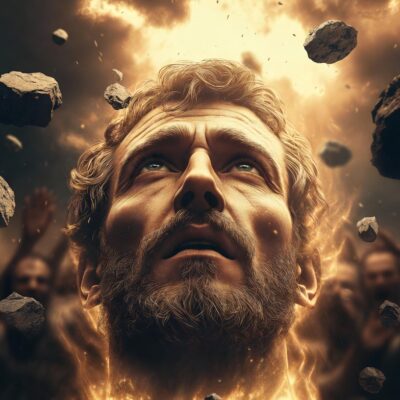
Full of the Holy Spirit, Stephen gazes into glory, sees Jesus the Son of Man standing at God’s right hand, and declares the vision out loud—fulfilling Christ’s own prophecy before the same council.
III. Footsteps of the Condemned
Dragged outside and stoned, Stephen echoes Jesus three times: committing his spirit to the Lord, kneeling to forgive his killers, and falling asleep in perfect peace while Saul watches.
IV. Murder Ignites the Fire
The first Christian martyr’s blood does not silence the gospel—it fuels it; every subsequent persecution, from James to today, has only accelerated the unstoppable advance of Christ’s kingdom.
V. Will You Stand or Shrink?
In a world that still stones the faithful, the Spirit who empowered Stephen demands we pray for the persecuted, proclaim boldly, and be ready to follow in His footsteps—no matter the cost.
Bottom line: When you follow Jesus all the way to the stones, your death doesn’t end the gospel—it multiplies it.
Introduction and Scripture Reading
We’ve already considered Stephen’s defense, and so we come to the very end of Acts chapter 7, so the last several verses beginning at verse 54 through verse 60. Once again, listen to the reading of God’s holy word.
When they heard these things, they were cut to the heart, and they gnashed at him with their teeth.
But he, being full of the Holy Spirit, gazed into heaven, and saw the glory of God, and Jesus standing at the right hand of God, and said, Look, I see the heavens opened, and the Son of Man standing at the right hand of God. Then they cried out with a loud voice, stopped their ears, and ran at Him with one accord. And they cast Him out of the city, and stoned Him. And the witnesses laid down their clothes at the feet of a young man named Saul. And they stoned Stephen as he was calling on God and saying, Lord Jesus, receive my spirit. Then he knelt down and cried out with a loud voice, Lord, do not charge them with this sin. And when he had said this, he fell asleep.
Seek the Lord’s blessing on this, his word. Oh Lord, God in heaven, we do praise you and thank you for your word. It’s only infallible rule for faith and life to lead us, guide us, direct us. And as we come into this passage, we just pray, Lord, that you would open our hearts and minds to hear, to receive the truth that is here for us, the example given, and that we might be bold with our faith and with the gospel of the Lord Jesus Christ. We pray for your blessing now upon your word. In the name of the Lord Jesus, we pray. Amen.
The False Accusation and Stephen’s Defense
We remember that the Jewish religious leaders had falsely accused Stephen of speaking against the law and against the temple. And last time we considered his defense in chapter 7 verses 2 through verse 53, so a lengthy defense. But in that defense, Stephen not only proved that they were wrong, but he actually turned the tables on them and then clearly demonstrated from the Word of God that they, like their forefathers, were the ones who consistently rebelled against God. They were the ones who blasphemed His name and His law. They were the ones who turned to idolatry. They were the ones who rejected all those that the Lord had sent to save and deliver them, including, most recently, the just one. the Lord Jesus Christ.
And in fact, it’s interesting, again, we noted last time that Stephen never mentions the name Jesus. He just says the Just One, but they clearly know who he’s referring to.
The Council’s Furious Response
When our passage this evening, we see how the Jewish Council responds to this revelation of truth.
Verse 54, when they heard these things, they were cut to the heart. And they gnashed at him with their teeth.
Now note this about their response. First, they were cut to the heart. Now it’s interesting that this is the very same response that Peter and John received when they were here, where Stephen is, standing before this same council, probably not that long before this. When they defended themselves in Acts chapter five, And we read there that after speaking, they were cut to the heart, or I think it uses the term, well, they just got angry. But being cut to the heart literally means to cut through or to cut in pieces, and is a euphemism, again, for becoming extremely angry. And so this is the response that we see in both of these instances, as it’s the same Greek words that’s being used here, although, again, it’s been translated slightly different in Acts chapter 5 as it is here in chapter 7.
These religious leaders were furious at what had been testified against them. These men, first Peter and John, and now Stephen, that these men charged them with the death of Jesus, which certainly they couldn’t deny. But it seems as though just hearing it as a charge against them before God was just much too much for them to bear. And so they respond with great anger.
As we considered when we looked at Acts 5 verse 33, this cut to the heart is much different than what we find after Peter preached at Pentecost. Remember there that he called the crowd to repentance in Acts chapter 2 verse 37 and it says there that they were also cut to the heart.
Well, even though it reads the same in English, here in Acts 7 and in Acts 2, they aren’t the same words. Again, the underlying Greek word for cut in Acts 2 is different as it is, as it has the sense of piercing, poking, or even stabbing. Now, certainly both terms, what’s used here in Acts 2 and then what’s used in Acts 5 and Acts 7 are obviously quite painful. whether you’re cut or you’re stabbed or poked. But there’s obviously a difference between being pierced and poked in one’s conscience and then having it completely severed and cut in two.
The first brings sorrow leading to repentance, but the second provokes anger, fury, and rage. And so having been cut through, this group of Jewish leaders in Acts 7 is provoked to anger. And it’s such great anger that it leads to great violence as we’ll soon see.
But secondly, note how Luke further describes their anger in that they gnashed at him with their teeth.
Now this is a pretty graphic description that isn’t exactly complimentary. We can imagine the gnashing of teeth that you see in a wild or vicious dog that are ready to leap upon and tear into a passerby. And certainly if it weren’t for a leash or a well-placed fence, that’s very likely what they would do. Well, this imagery of gnashing teeth is used often both in the Old Testament and the New Testament.
For example, Psalm 37, verse 12, the wicked plots against the just and gnashes at him with his teeth. Here it describes the wicked’s anger and hatred for the righteous as they metaphorically want to kind of chop at them with their teeth and bite at them.
In the New Testament, we find this Jesus using the same expression described of the wicked in the eternal torments of hell. Matthew 22, he says, then the king said to the servants, bind him hand and foot, take him away and cast him into outer darkness. There will be weeping and gnashing of teeth.
Now this off use graphic description of those in hell shows really ultimately their stubborn anger and their hatred toward God and all that’s good and all that’s holy. They’re angry about and furious about being in the flames of hell that they justly deserve. And so they gnash their teeth. And so what is Luke saying then about these religious leaders who are gnashing their teeth at Stephen? They’re filled with such fury against the righteous Stephen. And like wild dogs or untamed beasts, they’re consumed with the hatred of hell. And the reality is, if they don’t humble themselves and repent, well then, they’re going to continue this gnashing of teeth for an eternity.
But thirdly, we also want to note here the ever-increasing hostility toward the gospel and those who proclaim it.
Gary, if you remember back in Acts chapter 5, the apostles were spared a certain death when Gamaliel, the old wise, highly revered member of the council intervened and he urged them to let Peter and John go. And his reasoning, remember, was that if this new movement was from men, well then it’s soon going to fall apart. But if this movement was actually from God, well, then it would continue to grow. And as it did, the Jewish council would find themselves fighting against God himself.
Well, it seems that as the apostles and now Stephen persisted in proclaiming the gospel, that the evidence was beginning to stack up that this movement was no mere passing fad of man, but it was a true movement from God.
And yet this group of stubborn leaders wasn’t about to accept this. And so, in effect, proving the very point Stephen had made in his defense, they, like their forefathers, always rejected God’s servant and rebelled against his truth. So gnashing their teeth at Stephen with hearts filled with hatred and rage, they pressed in around him. But Stephen remained steadfast.
Stephen’s Heavenly Vision
But he, being full of the Holy Spirit, gazed into heaven and saw the glory of God, and Jesus standing at the right hand of God, and said, Look, I see the heavens opened and the Son of Man standing at the right hand of God.
Luke again, for the third time since we were introduced to Stephen in chapter 6, speaks of the presence of the Holy Spirit that’s with him. Stephen’s character that led to his being chosen and appointed as a deacon was there because of the presence of the Holy Spirit with him. His boldness in preaching was because of the Holy Spirit that was with him. And now his steadfast contentment and trust in God, facing fierce, even deadly opposition, again is due to the work of the Holy Spirit in him.
Remembering the promise that Jesus made to his disciples, that lo, he would be with him always, that he would send the Comforter who would be with him. Well, here the Comforter, the Spirit of the living God, is with Stephen. and so filled with the Spirit, that he now is privileged to see a vision of heaven and the glory of God and the Lord Jesus Christ standing at the right hand of God.
Now, the prophet Isaiah, the apostle Paul, John, and Stephen are the privileged few to see this glimpse of the glory of heaven. And the testimony that they record or is recorded of them in the scriptures ought to be enough for us to know that truly this is for real. That God’s presence is for real. Heaven is for real. And that is the testimony that they bear witness to.
Following in Jesus’ Footsteps
But what’s also interesting here is that in his death, Stephen is faithful to follow in the footsteps of his savior, Jesus. In fact, this is the first of three instances where Stephen responds in a similar fashion to the response of Jesus when he was on trial and when he was about to be put to death.
First parallel:
In verse 56, he says, look, I see the heavens open and the son of man standing at the right hand of God. You remember when Jesus was on trial before this very same Sanhedrin, he was asked point blank by the high priest, are you the Christ? And up to that point, Jesus had been silent. But having been put under oath, he responded truthfully and said in Mark 14, I am. And then he continued, and you will see the son of man sitting at the right hand of the power and coming with the clouds of heaven. And in that passage, Jesus was actually quoting from the prophet Daniel in chapter 7, Daniel 7, as he describes, declares himself to be the Messiah, to be this Son of Man. And so when Stephen makes reference to this same passage in Daniel, he’s actually declaring fulfilled What Jesus said would happen. Jesus said that you will see the Son of Man sitting at the right hand of power. And here Stephen says, I see the Son of Man sitting at the right hand of God. He’s there already. He declares this fulfilled, that the Son of Man, that Jesus, truly is seated at the right hand of God.
And again, we know the religious leaders knew exactly what Stephen was referring to, and they essentially responded the same way as when Jesus spoke, with violence and a thirst for blood.
The Stoning
Verse 57, then they cried out with a loud voice, stopped their ears, and ran at him with one accord. And they cast him out of the city and stoned him. And the witnesses laid down their clothes at the feet of a young man named Saul.
Now it’s typical Jewish custom at the time that the ones who were the witnesses to a crime would actually be the ones who would lead in the stoning of the one that has been charged. And when you think about that, this was perhaps a way to steer people away from making false charges. Because if they knew that they had to cast the first stone, well, then that certainly would give them pause. It’s easier to think somebody else can do it. But no, if I have to do it, well, I better make sure that the accusation and the charge is true. But remember that these were false witnesses. Stephen had committed no crime. And so what was being carried out here was nothing short of murder. And it was also a violation of Roman law. Remember with Jesus, the Jewish leaders were powerless to put him to death. They needed the judgment and the consent of the Roman governor. this angry mob, they take the law into their own hands and they begin stoning Stephen. Again, stoning was the typical form of execution for capital crimes in the Old Testament and would have certainly been pretty brutal way to die. But before this group of mad raving executioners begins throwing stones at Stephen, Luke mentions that before they started, They first laid their robes at the feet of a young man named Saul. So ridding themselves of their robes probably allowed them to be able to throw more easily.
But who is this young man? And since he is not taking part in the throwing of stones himself, well, it’s possible that he’s likely one of the council leaders, someone though young, and yet has a great deal of influence and authority. Who is he? Well, we know who he is, but for now, Luke leaves this young man as kind of a mystery, kind of with this ominous sense of foreboding of something is coming related to this young man.
Stephen’s Final Words – Echoing the Savior
Well as this angry mob was stoning Stephen amazingly, Stephen, still full of the Holy Spirit and certainly strengthened by the Holy Spirit, has enough sense and strength to actually speak and cry out.
Verse 59, they stoned Stephen as he was calling on God and saying, Lord Jesus, receive my spirit.
And again, this is the second time Stephen speaks something similar to what Jesus spoke. Remember that when Jesus was hanging on the cross with his dying breath, he cried out, Father, into your hands, I commit my spirit. And it’s incredible that Stephen would have already been so familiar with the words that Jesus spoke from the cross. Now, it’s true that Jesus committed his spirit to the father, but Stephen goes to the Father through the Son, through Jesus, even as our prayers go to the Father through Jesus, the Son. And thus he pleads the Lord Jesus to receive his spirit. And of course, the fact that Stephen calls Jesus Lord makes the identification that he is truly one with God, the Father.
And again, even with these words, this certainly wouldn’t have escaped the ears of his attackers and perhaps only caused them to stone him more furiously.
Verse 60, And then finally in verse 60, he knelt down and cried out with a loud voice, Lord, do not charge them with this sin. And when he had said this, he fell asleep.
Again, this is now the third time Stephen repeats the words of Jesus or similar words. Even as he was dying on the cross, you remember Jesus in great pain and agony and the soldiers were casting lots for his clothes. He cried out, Father, forgive them for they do not know what they do.
Again, this was an incredible prayer. And one that we know was actually answered. specifically on the day of Pentecost, and was continuing to be answered as more and more, even those who may have accused Jesus and cried out for His crucifixion, many came to know and trust and believe in Him as their Lord and Savior, forgiven of their sins, forgiven of their part in the death of Jesus. It’s the ultimate example of loving your enemies and praying for those who hate you and persecute you.
And here we see Stephen following the example of his Lord and Savior, pleading that the Lord would not hold this sin against even those who are stoning him. And remarkably, we know, at least in one way, in which the Lord was faithful to answer this prayer. when that mysterious young man named Saul would be converted to Christ on the road to Damascus not long after this time. And this is a significant point for us to remember as well.
The Legacy of the First Martyr
Stephen was the first to follow in the footsteps of Jesus and die for his faith in the name of Jesus. He was the first Christian martyr. But he certainly wouldn’t be the last. As we know, there would be a long line of godly, faithful ones who would have given their all for the glory of Christ. After Stephen, there would be James, recorded later, I think in Acts chapter 12. James loses his life because of his faith in Christ. And then, of course, we know many of the other apostles would lose their lives, and many others on down through the centuries. even up to today, where some in various parts of the world are still being put to death because of their faith in Christ.
Many of these, before their death, will be challenged, yes, even tempted, to recant and deny their faith in Christ. If you would just recant and deny your faith in Christ, what will spare your lives? But the faithful like Stephen, remained steadfast, and they simply fell asleep into the waiting arms of the Lord Jesus.
Yet far from quenching the spread of the gospel, we know from the book of Acts and from church history and even current history, that persecution and martyrdom only further fueled the spread of the gospel. So that again, even today, wherever attempts are made to silence the gospel, and our brothers and sisters in Christ are being martyred because of their unwavering faith, that the gospel still marches on, even reaching some of those who are so hostile, who are gnashing their teeth at Christians, at the gospel, and at God himself.
Brothers and sisters, this should certainly challenge us really to remember to pray regularly for those who are persecuted for the cause of Christ. And we also should be encouraged by their faith and witness to be as bold as we can with the gospel. So that if our turn should come, and it very well may come at some point, It certainly would not take much, even in our own land. But if our term would come to suffer death for the cause of Christ and the gospel, that the spirit would also be with us as well, and that we would remain as steadfast and faithful to the end as those who have gone before us, all to the glory of God alone.
Closing Prayer
Let’s pray.
O gracious God in heaven, we do rejoice and give thanks for your word, And we just thank you for your servant, Stephen, who tremendously bold in his faith and is the first example given after the death of the Lord Jesus Christ. The first one that we know of who lost his life because he trusted in you and he faithfully proclaimed the gospel. And we know that there will be many, many more after him. Even today, we know that there are many throughout the world who are persecuted.
Some, maybe it’s just they might lose their job or they’re treated unkindly because they dare to lead a Christian life. Maybe they’re mocked and scorned by friends. They’re made fun of. Others may be thrown in prison, may be beaten. and severely attacked and assaulted. And yes, some would lose their lives because of their faith in Christ Jesus.
The same faith that we share and profess. Father, we just pray that you would be with them and your people throughout the world and all these places. That you would uphold them and strengthen them. That just as your spirit was present with Stephen, it would be present with them. That your glory would shine upon their faces, even at their death. And that that witness of unwavering faith, even in the face of death, would be a witness that would turn hearts who look on, maybe even the executioners who are participating, that it would impact them greatly, that your spirit would convict them and that you would draw them to yourself again, as you have done over the centuries.
And so we just praise you and thank you, God. And we pray that you would help us. We are in a land currently where we have great freedom and liberty to speak openly. And may we be truly bold with the gospel. Because we know that even the liberties that we have can so easily be taken away. And so we just ask, Father, that you would strengthen us and encourage us and equip us to be your faithful servants.
All to the praise of your glorious name. We again praise you and thank you for our time together on this, the Lord’s day. And we pray for your blessing to be upon us as we enter into this week that lies ahead, equipped, strengthened, and encouraged by your word, by the fellowship of the saints to be ready, to be those witnesses of hope and light to this dying world. We pray all these things in Jesus name. Amen.