

Outline
I. Summoning a Childless Wanderer to Cling to Unfulfilled Promises Stephen opens with Abraham’s call from Ur, exposing the raw tension of radical faith: God promises land, nation, and descendants while giving Abraham no inheritance—not even a foot of ground—and forcing generations into slavery first.
II. Patriarchs’ Jealous Rage: Betraying and Selling Their Brother-Savior The honored fathers of Israel, consumed by envy, sell Joseph into slavery expecting him to die—yet God exalts the rejected one, making him ruler over Egypt and using the very man they abandoned to save the family that tried to destroy him.
III. Israel’s Brutal Rejection of Moses—and Their Headlong Plunge into Idolatry Even Moses, God’s chosen deliverer, is spurned by his own people the moment he acts; they rebel at Sinai, craft the golden calf, worship handmade idols, and chase false gods until God hands them over to exile—proving their hearts were always turned back to Egypt.
IV. Bursting the Temple Myth: The Most High Refuses Man-Made Boxes From wilderness tabernacle to Solomon’s temple, Stephen dismantles the illusion: the Most High does not dwell in buildings made by human hands; heaven is His throne and earth His footstool—rendering the charge of temple blasphemy hollow.
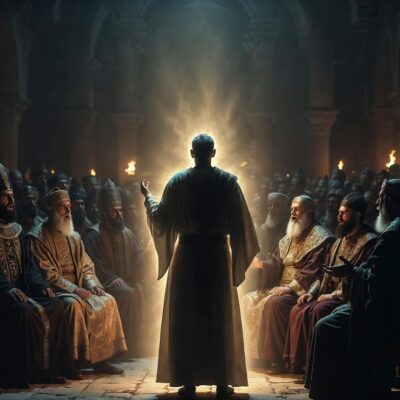
V. Flipping the Script: You Stiff-Necked Rebels Murdered the Just One Stephen turns the courtroom upside down, charging the Sanhedrin directly: “You always resist the Holy Spirit—as your fathers did—so do you,” persecuting prophets and becoming the betrayers and murderers of the Just One they now stand accused of defending.
VI. Rising Like Stephen: Boldly Proclaiming Truth Despite Deadly Opposition History’s pattern of rebellion warns the church today: opposition is inevitable, yet the same Spirit who empowered Stephen equips believers to speak fearlessly, carrying the gospel forward even when hearts are hardened.
Bottom line: Stiff-necked rebels have always rejected God’s deliverers and resisted the Holy Spirit—yet the faithful, filled by that same Spirit, proclaim Christ boldly no matter the cost.
Introduction and Scripture Reading
Acts chapter 7, and we have a bit of a lengthy passage before us, as we’ll read verses 1 through verse 53. This is Stephen’s defense before the Sanhedrin, and it reflects some of what we just read earlier from Nehemiah. So Acts chapter 7, verse 1. Once again, listen to the reading of God’s holy word.
Then the high priest said, Are these things so? And he said, Brethren and fathers, listen.
The God of glory appeared to our father Abraham when he was in Mesopotamia, before he dwelt in Haran, and said to him, Get out of your country and from your relatives, and come to a land that I will show you. Then he came out of the land of the Chaldeans and dwelt in Haran. And from there, when his father was dead, he moved him to this land in which you now dwell.
And God gave him no inheritance in it, not even enough to set his foot on. But even when Abraham had no child, he promised to give it to him for possession and to his descendants after him. But God spoke in this way, that his descendants would dwell in a foreign land, and that they would bring them into bondage and oppress them four hundred years. And the nation to whom they will be in bondage I will judge, said God.
And after that they shall come out and serve me in this place. Then he gave him the covenant of circumcision. And so Abraham begot Isaac, and circumcised him on the eighth day. And Isaac begot Jacob, and Jacob begot the twelve patriarchs. And the patriarchs, becoming envious, sold Joseph into Egypt.
But God was with him, and delivered him out of all his troubles, and gave him favor and wisdom in the presence of Pharaoh, king of Egypt. And he made him governor over Egypt and all his house. A famine and great trouble came over all the land of Egypt and Canaan, and our fathers found no sustenance. But when Jacob heard that there was grain in Egypt, he sent out our fathers first.
And the second time Joseph was made known to his brothers, and Joseph’s family became known to the Pharaoh. Then Joseph sent and called his father Jacob and all his relatives to him, seventy-five people. So Jacob went down to Egypt, and he died, he and our fathers.
And they were carried back to Shechem, and laid in the tomb that Abraham bought for a sum of money from the sons of Hamor, the father of Shechem. But when the time of the promises drew near, which God had sworn to Abraham, the people grew and multiplied in Egypt, till another king arose who did not know Joseph. This man dealt treacherously with our people and oppressed our forefathers, making them expose their babies so that they might not live.
At this time Moses was born, and was well pleasing to God, and he was brought up in his father’s house for three months. But when he was set out, Pharaoh’s daughter took him away, and brought him up as her own son. And Moses was learned in all the wisdom of the Egyptians, and was mighty in words and deeds. Now when he was forty years old, it came into his heart to visit his brethren, the children of Israel.
And seeing one of them suffer wrong, he defended and avenged him who was oppressed and struck down the Egyptian. For he supposed that his brethren would have understood that God would deliver them by his hand, but they did not understand. And the next day he appeared to two of them as they were fighting, and tried to reconcile them, saying, Men, you are brothers, why do you wrong one another? But he who did his neighbor wrong pushed him away, saying, Who made you a ruler and judge over us? Do you want to kill me, as you did the Egyptians yesterday?
Then at this saying Moses fled, and became a dweller in the land of Midian, where he had two sons. And when forty years had passed, an angel of the Lord appeared to him in a flame of fire, in a bush in the wilderness of Mount Sinai. When Moses saw it, he marveled at the sight. And as he drew near to observe, the voice of the Lord came to him, saying, I am the God of your fathers, the God of Abraham, the God of Isaac, and the God of Jacob. And Moses trembled and dared not look. Then the Lord said to him, Take your sandals off your feet, for the place where you stand is holy ground.
I have surely seen the oppression of my people who are in Egypt. I have heard their groaning and have come down to deliver them. And now come, I will send you to Egypt. This Moses, whom they rejected, saying, Who made you a ruler and a judge, is the one God sent to be a ruler and a deliverer by the hand of the angel who appeared to him in the bush.
He brought them out after He had shown wonders and signs in the land of Egypt, and in the Red Sea, and in the wilderness forty years. This is that Moses who said to the children of Israel, The LORD your God will raise up for you a prophet like me from your brethren, him you shall hear. This is he who was in the congregation in the wilderness with the angel who spoke to him on Mount Sinai, and with our fathers, the one who received the living oracles to give to us, whom our fathers would not obey but rejected. And in their hearts they turned back to Egypt, saying to Aaron, Make us gods to go before us, as for this Moses who brought us out of the land of Egypt, we do not know what has become of him.
And they made a calf in those days, offered sacrifices to the idol, and rejoiced in the works of their own hands. Then God turned and gave them up to worship in the host of heaven, as it is written in the book of the prophets. Did you offer me slaughtered animals and sacrifices during forty years in the wilderness? O house of Israel, you also took up the tabernacle of Moloch, and the star of your God, Ramthan, images which you made to worship. and I will carry you away beyond Babylon.
Our fathers had the tabernacles of the witness in the wilderness as he appointed, instructing Moses to make it according to the pattern that he had seen, which our fathers having received it in turn also brought with Joshua into the land possessed by the Gentiles, whom God drove out before the face of our fathers until the days of David, who found favor before God and asked to find a dwelling place for the God of Jacob. But Solomon built a him house built him a house However, the Most High does not dwell in temples made with hands. As the Prophet says, Heaven is my throne and earth is my footstool. What house will you build for me, says the Lord, or what is the place of my rest? He has my hand not made all these things.
You stiff-necked and uncircumcised in heart and ears, you always resist the Holy Spirit as your fathers did, so do you. Which of the prophets did your fathers not persecute? And they killed those who foretold the coming of the just one, of whom you now have become the betrayers and murderers, who have received the law by the direction of the angels and have not kept it.
Opening Prayer
Seek the Lord’s blessing on this, his word.
Gracious God and Heavenly Father, we do praise you and thank you for your word. And as we have read two passages recounting the history of your people, our forefathers in the faith, and yet we have seen this pattern of rebellion. And we pray, Father, that as we consider this in the context of Stephen’s defense against the Sanhedrin, we pray that you would help us to see the lessons that are being illustrated here. We know that these things are given for our instruction even today, and that you would lead us and guide us to your truth, all to the praise of your glorious name. We pray now for your blessing upon your word. In the name of the Lord Jesus Christ, we pray. Amen.
Background: Stephen’s Ministry and the Charges Against Him
Remember that Stephen, who was one of the first deacons who were appointed by the apostles to serve the widows, and yet Stephen had exhibited many other gifts. And certainly in the power of the Holy Spirit, he was putting those gifts to use as he was teaching and preaching to the people and proclaiming the gospel. He also did many signs and wonders in the presence of the people. And again, he proclaimed the truth of the Lord Jesus Christ. But his faithfulness to Jesus led, of course, to opposition from the Jewish authorities who, as they did with Jesus before him, falsely accused Stephen and were eager to put him to death.
And as we knew last time, the two main charges against Stephen were that back in chapter 6 verse 13, this man does not cease to speak blasphemous words against this holy place and against the law. Speaking blasphemy against this holy place that is the temple and the law again Considered to be direct assault were considered to be direct assaults upon God himself the temple was the dwelling place of God and the law was his word given to the people and so you you blaspheme those things, then you ultimately are blaspheming the Lord Himself. But as we know, Stephen wasn’t doing either of these things. The examples of these offenses that they give, that those who are charging him with these crimes, in verse 14 of chapter 6, for we have heard him say that this Jesus of Nazareth will destroy this place and change the customs which Moses delivered to us.
But, as we saw before, that both of these charges were false. But, in an insincere show of justice and fairness, the high priest inquires here in verse 1 of chapter 7, Are these things so? Now, we know that the high priest wasn’t interested in the truth. He wasn’t interested in the facts.
As with the earlier trial of Jesus, which had been perhaps several months, maybe even a year or so after this time, They had already condemned Stephen in their hearts. But, again, they wanted to have an appearance of justice, and so they allowed him to speak his defense, knowing that there would really be nothing that he could say that would change their minds, unless, of course, he just fully outright recanted and turned away all that he had been teaching regarding Jesus.
Stephen’s Spirit-Led Defense Strategy
Well, in Acts 7, we have Stephen’s very lengthy defense. And what’s striking really at the first, as we have read through this defense, is that he doesn’t seem to directly address the charges. but he takes this opportunity to give this kind of full history lesson. But as we’ll see in doing so, he’s actually is responding to the two charges laid against him, that he was speaking against the law of Moses and the temple.
Well, as Jesus had promised the disciples, that when the time came for them to be dragged before the courts and the councils of men, Jesus had promised, but when they arrest you and deliver you up, do not worry beforehand or premeditate what you will speak. But whatever is given you in that hour, speak that, for it is not you who speak, but the Holy Spirit.
Here we see the Holy Spirit is now leading Stephen in his defense. And so again, he doesn’t right jump to, hey, this is why I’m doing this. But this is why Stephen is going through this long history lesson, because the Lord, through the Spirit, is going to bring out some important truths that will be difficult for these men to hear.
But again, another interesting thing here is that in the main body of his defense, so from verse 2 all the way to verse 53, Stephen never once speaks the name of Jesus. So he’s building this whole defense to demonstrate that not only what he was saying was true, but that the real offenders were the Jewish leaders. And the only veiled reference that he makes to Jesus is that he calls him the just one whom they have rejected and murdered, having put this just one to death on the cross.
Part 1: Abraham and the Covenant of Faith
When Stephen begins his defense, and we’re going to kind of go through this in chunks, but verses 2 to 8, he seeks to establish the truth of God making a covenant with Abraham. And so he begins from the time when God first called Abram out of Ur of the Chaldeans in Genesis 12, up to the reaffirmation of the covenant in Genesis 15, and then the giving of the covenant sign of circumcision in Genesis 17.
And the key point that Stephen is focusing on here is really the assurance of God’s promise given to Abraham, despite the reality that Abraham didn’t experience the fulfillment of those promises in his lifetime. And so he says in verses four and five, he moved him to this land in which you now dwell, referring to the people that Stephen’s talking to, to the Jews now having been in this land.
But he says about Abraham, God gave him no inheritance in it, not even enough to set his foot on. But even when Abraham had no child, he promised to give it to him for possession and to his descendants after him. In fact, as Stephen goes on to remind them, even the next several generations of Abraham’s descendants would not experience the fulfillment of that promise that was made. because they would be enslaved in a foreign land for 400 years. But the whole point was that they must have faith in the promises that God had given him, just as Abraham had faith, and it was accounted to him as righteousness when he believed God, even though he did not see the fulfillment of those promises.
And those promises, again, sealed with the covenant sign of circumcision. And so again, the lesson here is that Stephen was saying, look, they needed to trust God and trust in the promises. They needed to have true and sincere faith. But so far, these Jewish leaders would have no objection to what Stephen was saying. Abraham was their father in flesh as well as in faith.
And he believed what God had promised him. And he set his face toward the fulfillment of those promises. God will give them a land, a nation and a promised son and a people from that son. But Abraham again had to wait for the fulfillment of those promises as he was told his descendants must again first endure a period of slavery. And yet God promised that he would deliver them and that he would punish his enemies. And so these covenant promises would ultimately again, we know, fulfilled in Jesus. And that he would be the one who would truly save his people from the bondage of slavery and of sin.
Part 2: Joseph – Rejected by His Brothers, Exalted by God
Well then from Abraham, Stephen moves to Joseph in verses 9 through 16. And as Stephen recounts the story of Joseph, he again makes first the key point in his building accusation against the Jewish leaders of his day. First it was talking about Abraham. You got to have faith, true, sincere faith in the promises of God. But now he’s building his accusation against them and the storied legacy of Abraham, Isaac, and Jacob leading up to the 12 patriarchs.
And yet he points out that it was these honored patriarchs, the fathers of the tribes of Israel, they were consumed with jealousy of their brother Joseph, even to the point where they sold him into slavery. Remember, they wanted to murder him, put him to death, and kill him. But if it weren’t for the intervention of the older brother Judah, I believe it was Judah who suggested, no, let’s just sell him into slavery.
And so they turned against their own flesh and blood. They betrayed Joseph and they sold him and presumed that they would never see him again. And so in verses 9 and 10, we read though, but God was with him. That is, God was with Joseph. and delivered him out of all his troubles, and gave him favor and wisdom in the presence of Pharaoh king of Egypt, and he made him governor over Egypt and all his house. So his brothers were envious. They sold him to slavery expecting he’s not going to survive. And yet God remembered him and God richly and abundantly blessed Joseph, even in the midst of many trials that we know that he faced even while he was there in Egypt. Well, the patriarchs truly meant evil for their brother Joseph.
But God meant it for good. And as the Lord richly blessed this one whom they had rejected, delivering him from afflictions, including false accusations and imprisonments, and raising him up to power in the land of Egypt. And because of Joseph, the Lord blessed the land of Egypt.
And again, Stephen makes this note very clear. That here was this one that God had chosen and set apart, was going to deliver them. Ultimately, they reject him. They sold him into slavery. But God is blessing the one that they rejected. And Stephen makes clear in verse 11 that when famine came upon the land, our fathers, so the patriarchs that were left behind, that didn’t, that sold their brother into slavery, they found no sustenance.
And yet, where Joseph was, in the land of Egypt, whom they sold, there was food in great abundance. Well, as we know from the story of Joseph, God’s plan overruled the wicked plot of Joseph’s brothers. And again, ultimately, it was through Joseph, again, the one that they had rejected, it was through him that their lives would ultimately be spared.
And so I think, hopefully, you can begin to see the angle that Stephen is beginning to work here. First, they have to have true and sincere faith. And God provides Joseph to save them, and yet they reject him. And yet God is committed to saving them anyway.
Part 3: Moses – Repeated Rejection and Rebellion Against God’s Law
Next, Stephen moves to Moses. And verses 17-43, and here he establishes his case that it wasn’t he who subverted the law of Moses, but it was actually these Jewish leaders who, like their very forefathers, rebelled against God’s law. Again, Moses was of their own flesh and blood. He was the son of the tribe of Levi. And God had graciously spared Moses from the evil that Pharaoh brought upon the children of Israel. And Moses, like Joseph before him, was actually given great privilege in the house of Pharaoh. But when it came time for Moses to take up the work the Lord had preserved him for and called him to, he was rejected by his own people.
For he supposed that his brethren would have understood that God would deliver them by his hand, but they did not understand. And the next day he appeared to two of them as they were fighting, and tried to reconcile them, saying, Men, you are brothers, why do you wrong one another? But he who did his neighbor wrong pushed him away, saying, Who made you a ruler and judge over us? Do you want to kill me as you did the Egyptians yesterday?
And so when Moses makes his first display of devotion to his own people, they didn’t acknowledge him. as God’s deliverer and defender, and in fact took offense at him because he presumed to be a ruler over them. And again, even at this early point, Stephen is making clear that the fathers rebelled against Moses, rejecting him, just like they had earlier rejected Joseph, the very one who ended up saving their lives. And this rebellion would, of course, only get worse.
After the Lord calls Moses to be the deliverer and sends him back to Egypt, Stephen makes clear in verse 35, this Moses, whom they rejected, saying, Who made you a ruler and a judge, is the one God sent to be a ruler and a deliverer by the hand of the angel who appeared to him in the bush. So Moses was clearly sent by God and he delivered. He did deliver the Israelites with a mighty hand and led them for 40 years, giving them God’s law. And yet, even as the Lord was speaking to Moses on top of Mount Sinai, giving him that very law, the people once again rebelled against Moses.
They rebelled against the Lord. They rebelled against his law. by building the golden calf and worshiping it. Stephen charges in verse 39, this is he who was in the congregation in the wilderness with the angel who spoke to him on the Mount Sinai and with our fathers, the one who received the living oracles to give to us, right? They’re talking about Moses, whom our fathers would not obey, but rejected.
And in their hearts, they turned back to Egypt saying to Aaron, make us gods to be to go before us as for this moses who brought us up out of the land of egypt we do not know what has become of him and they made a calf in those days offered sacrifices to the idol and rejoice in the works of their own hands and this was only the beginning again of their long history of rebellion against God.
Their history of seeking after the false idol gods of the nations around them, leading ultimately to their expulsion from the land that the Lord had promised to Abraham that would be for their descendants for generations. And so at this point, Stephen then leaps forward to the time just before the exile and he quotes in verses 42 and 43 he quotes from the prophet Amos about God’s anger against Israel because of their insistent idolatry and how he will soon send them away to Babylon.
Then God turned and gave them up to worship the host of heaven, as it is written in the book of the prophets, Did you offer me slaughtered animals and sacrifices during forty years in the wilderness, O house of Israel? You also took up the tabernacle of Malak and the star of your god, Ramphan, images which you made to worship, and I will carry you away beyond Babylon.
And again, the passage that we read earlier from Nehemiah is Nehemiah after the exile, after they had returned from the exile, that was part of Nehemiah’s prayer of confession as they’re looking back on this same evil and wickedness, rebellion against God and against his law that the fathers had done that led to their being exiled from the land.
So far in this brief recounting of Israel’s history, Stephen has shown how the fathers of Israel often rejected the very one whom God sent to save and deliver them, and how they often rebelled against God and His law by turning to idolatry and gross immorality, imitating the pagan nations around them. In other words, Stephen was showing how the fathers repeatedly rebelled against the Lord, His law, and committed blasphemy against the Most High when they turned their hearts to idolatry.
And so in a way, really the thrust of Stephen’s argument and his defense is basically this. Look, who are you to accuse me of blasphemy and distorting God’s law when that’s all that you and your forefathers have done? ever since Abraham, ever since the beginning. And even though the Lord raised up one servant after another to lead, guide, and deliver his people, the people more often than not rebelled against them.
Well, how much more would they do the very same thing when the Lord brought to the film, the promise that he made to Israel through Moses and verse 37, the Lord, your God will raise up for you a prophet like me from your brethren, him you shall hear. Would they receive this prophet any better than anyone that they had received before? Well, as we know, they didn’t for that prophet was Jesus. And they rejected him and they put him to death.
And so if these religious leaders are going to accuse anyone of distorting the law and committing blasphemy, they need to be looking in the mirror. And that basically is Stephen’s argument. You are guilty of the very crimes that they are charging him with.
Part 4: The Temple – Not God’s Permanent Dwelling
But Stephen continues, as he now addresses the second charge about the attack on the temple.
Verse 44, he says, Our fathers had the tabernacle of witness in the wilderness, as he appointed, instructing Moses to make it according to the pattern that he had seen, which our fathers, having received it in turn, also brought with Joshua into the land possessed by the Gentiles, whom God drove out before the face of our fathers until the days of David, who found favor before God and asked to find a dwelling place for the God of Jacob. But Solomon built a him house built him a house However, the Most High does not dwell in temples made with hands, as the prophet says, Heaven is my throne and earth is my footstool. What house will you build for me, says the Lord, or what is the place of my rest? He has my hand not made all these things.
So Stephen here briefly recounts the history of, again, the tabernacle and then the temple, the place where God met with his people, where he dwelt in their midst. But this tabernacle, this temple, and then later the temple, was truly nothing. compared to the glory, the true glory of God’s presence, which those things symbolized. In fact, Stephen makes this point clear even at the dedication of the temple, right?
Remember Solomon’s prayer. Solomon himself acknowledged that the glory of the Lord does not dwell on this house made with hands, the hands of men. He is much bigger than that, because the whole earth is his footstool. So how can he be contained in this little building on a hill somewhere out in the wilderness?
So if they would charge Stephen with speaking against the temple, well then so be it. Because the temple was just a building. And in fact, by this time, now again, well after the death of Jesus, the glory of the Lord had already long departed from the temple. And the temple is just now a symbol of just empty, vain religion. It was a symbol of a faith that has rejected God, its God and its Savior. And this, of course, would be affirmed in less than a generation’s time when the temple and the city of Jerusalem itself would be totally destroyed by the Romans. Because we know with Jesus’ death, the once for all perfect sacrifice that he offered up, that the temple has now been rendered meaningless.
And so this is how Stephen defends himself against these charges. The history of the people of Israel was a long one of rejection, rebellion, and disobedience. And the temple, it did serve a purpose for a time, but has now had that purpose fulfilled in Christ.
Climax: The Direct Accusation
But then Stephen presses his point further in verse 51.
You stiff neck and uncircumcised in heart and ears. You always resist the Holy Spirit as your fathers did. So do you. Which of the prophets did your fathers not persecute? And they killed those who foretold the coming of the just one of whom you now have become the betrayers and murderers. who have received the law by the direction of angels and have not kept it.
And so in this charge, Stephen comes closest to mentioning Jesus, because He is the just one whom this council murdered. The very same council. And of course, they would know exactly who Stephen was talking about. But Stephen has now turned the tables on them.
You see, they’re the ones who have rebelled against God and blasphemed Him, just as their fathers had done. They received God’s law, ordained even by angels, and yet they didn’t keep it. God’s repeated chastisement and ultimately the captivity of Israel was evidence that they were stiff-necked. That is, that they were stubborn in their sin and that they were uncircumcised in their hearts. That is, they weren’t faithful followers of God’s covenant, unlike their father, Abraham. Stephen clearly charges them with the same crime that they had falsely accused him.
How will they respond? Well, we’ll consider that in more detail next time. It’s a little cliffhanger, but we know That will be quite costly for Stephen. But even with their murdering of Stephen, the truth of the gospel, we know, will continue to go forth.
In fact, it may be that their opposition is actually really just fanning the flames of the gospel rather than dousing those flames, which would be their hope. But here in his defense, Stephen, again empowered by the Holy Spirit, has exposed their rebellion. He’s exposed their hearts. They’re following in the very same footsteps as their forefathers, rejecting the Lord and His gracious means of salvation, which the warning is will invite sure and certain judgment upon them.
Application for Today
A warning, of course, even in our own day. As we strive to faithfully proclaim the Gospel, we know that it won’t always be received well. That people will oppose it. That it will be rejected. It will be rejected by those whose hearts are hardened against the truth. And it may be even costly to our very lives.
And yet, we pray that the Lord would be with us. That the same Spirit that was with Stephen, guiding him, giving him the words to speak, would be with us when called upon, if that would be the case. And we pray that as we seek to carry out the Great Commission, that the Lord would truly lead us to those away from those who have hard hearts, but would lead us toward those who are open and ready to hear the gospel, who are ready to respond in faith, all to the praise and the glory of God alone.
Closing Prayer
O gracious God in heaven, we do praise you and thank you for This important passage and just the reminder to us that all these things are written for our benefit and our encouragement, for our growth and grace and instruction. And we see here this history of stubborn rebellion and a rejection of you and your servants and of your truth, of your law. And Father, we can look around in our own day and we see the very same thing.
And yet you call us to be like Stephen, to be bold, to not be filled with fear and overcome, but to be faithful to proclaim your truth, knowing that you will be with us, that you will give us the words to speak at the right time. And that even that there would be those who would reject what we say, we know and trust and believe that there will be many others who will receive it and believe it in faith and be drawn to you and be brought into the glory of your holy kingdom.
Father, that is our purpose. That is the purpose that you’ve given to the church to proclaim the truth of the gospel, to carry it to the ends of the earth. And we ask that you would give us, in this congregation of your people gathered here, and other faithful congregations of your people in this community, that you would equip us to go forth into this world, despite whatever opposition we might face, to be bold. and that you would lead us truly to those who are ready to hear, to receive, and to believe that they might join with us in this great and glorious calling which you have placed upon us. Father, we just praise you and thank you for this encouragement. And again, we thank you for this, the Lord’s day. We thank you for the opportunity that we’ve had to worship, to fellowship, to just to sing your praise.
And as we prepare to go into the world and to the week that lies ahead, We pray that you would help us to remember these things, to be built up, to be strengthened, to be encouraged, that we might be those faithful servants, that we might bring glory to you in all that we do, until we return again on the next Lord’s Day. In the name of the Lord Jesus Christ, we pray. Amen.